Sql
What is best tool to compare two SQL Server databases schema and data duplicate
In the world of database management, maintaining consistency and accuracy across different environments is paramount. Whether you’re migrating data, deploying updates, or simply ensuring that development, staging, and production databases are in sync, the need to compare two SQL Server databases, both schema and data, arises frequently. This task, however, can be quite complex and time-consuming if done manually. Fortunately, several robust tools exist that automate this process, providing detailed comparisons and synchronization options. Selecting the right tool is crucial for streamlining database management, minimizing errors, and ensuring data integrity. This article will explore some of the best tools available, highlighting their features, benefits, and use cases to help you make an informed decision about which one best suits your needs. Understanding the nuances of schema comparison, data comparison, and the ability to synchronize changes effectively are key to efficient database administration.
Understanding the Need for SQL Server Database Comparison Tools
The necessity to compare and synchronize SQL Server databases stems from various real-world scenarios. During development cycles, developers often work with local databases that deviate from the production environment. Discrepancies can lead to unexpected errors and application instability when changes are deployed. Similarly, when migrating databases to newer versions of SQL Server or to different hosting environments (e.g., from on-premises to the cloud), a thorough comparison is essential to guarantee a smooth transition and prevent data loss or corruption. Even routine maintenance tasks like replicating data for reporting or backup purposes require comparing databases to ensure data consistency.
Furthermore, regulatory compliance often mandates that organizations maintain accurate and consistent data across all systems. Database comparison tools help meet these requirements by providing detailed audit trails of changes and discrepancies. They allow administrators to quickly identify and rectify any inconsistencies, ensuring data integrity and preventing potential compliance violations. According to a study by Gartner, organizations that invest in data quality tools experience a 20% improvement in operational efficiency [Gartner Data Quality Study]. This highlights the significant impact that effective database comparison tools can have on an organization’s overall performance and risk management.
In essence, SQL Server database comparison tools are not just about identifying differences; they’re about proactively managing risks, ensuring data quality, and streamlining database management processes. They empower database administrators and developers to work more efficiently, confidently, and accurately, ultimately contributing to the success of the organization.
Top Tools for Comparing SQL Server Databases
Several tools cater to the need for comparing SQL Server databases, each offering a unique set of features and capabilities. Some of the most popular and effective options include: SQL Compare by Redgate, ApexSQL Diff, dbForge SQL Compare, and Microsoft SQL Server Management Studio (SSMS) with extensions. These tools typically provide functionality for schema comparison, data comparison, and synchronization. The key differences lie in their user interface, performance, advanced features (such as conflict resolution and version control integration), and pricing models.
SQL Compare by Redgate is widely regarded as an industry standard. It offers a user-friendly interface, robust schema comparison capabilities, and the ability to generate synchronization scripts automatically. ApexSQL Diff provides similar functionality with additional features like object-level version control integration and support for comparing live databases, backups, and scripts. dbForge SQL Compare is another strong contender, known for its comprehensive feature set, including data masking and encryption options. For basic comparisons, SSMS with extensions can be sufficient, although it may lack the advanced features and performance of dedicated tools. Choosing the right tool depends on the specific requirements of your organization, the complexity of your databases, and your budget. Consider factors like the size of your databases, the frequency of comparisons, and the level of detail required in the comparison results.
For example, if you’re working with extremely large databases, you’ll want a tool that is optimized for performance and can handle large-scale comparisons efficiently. If you need to track changes over time, version control integration becomes a critical feature. And if you’re dealing with sensitive data, data masking and encryption options may be essential for compliance purposes.
Redgate SQL Compare
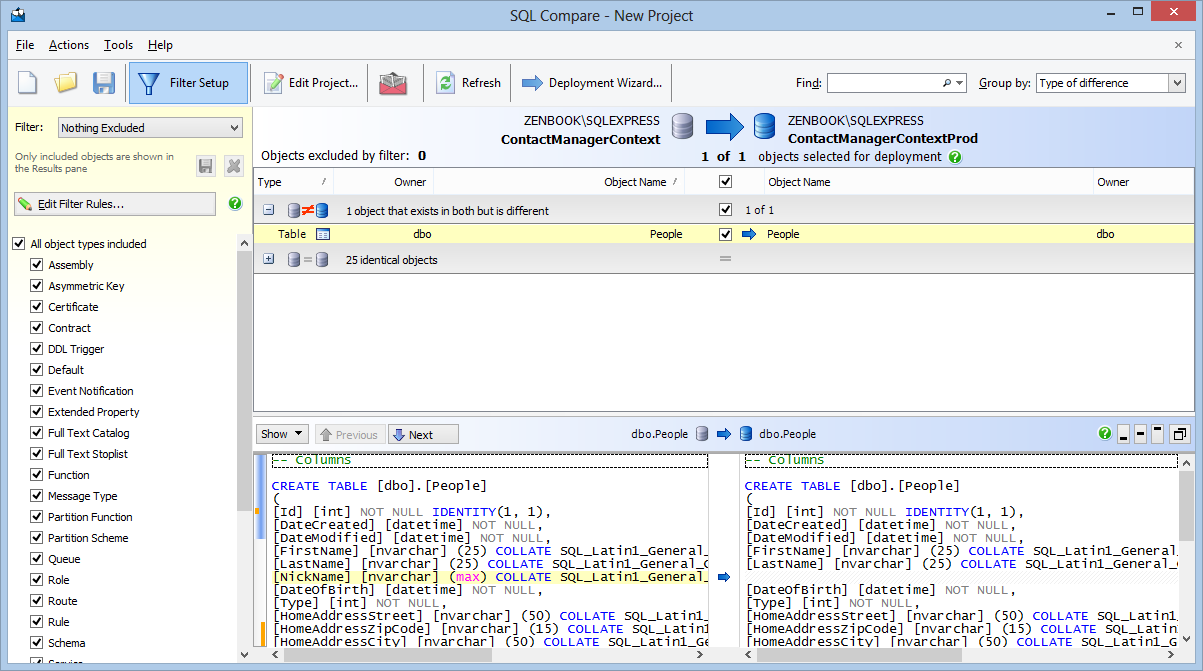
Redgate SQL Compare is a powerful tool designed for schema comparison and deployment of SQL Server databases. It allows users to quickly identify differences between database schemas, including tables, stored procedures, functions, and other database objects. The tool provides a visual representation of the differences, making it easy to understand the changes that need to be made. One of the key strengths of SQL Compare is its ability to generate deployment scripts automatically, which can be used to synchronize the databases. This feature significantly reduces the risk of errors and speeds up the deployment process.
SQL Compare also offers advanced features like conflict resolution, which allows users to resolve conflicting changes between different versions of the database schema. It supports various comparison options, including filtering objects by type, ignoring specific properties, and comparing databases on different SQL Server instances. The tool integrates seamlessly with other Redgate tools, such as SQL Data Compare and SQL Source Control, providing a comprehensive solution for database development and deployment. Redgate offers a free trial, allowing users to evaluate the tool before committing to a purchase. According to Redgate’s website, SQL Compare is used by over 800,000 database professionals worldwide [Redgate SQL Compare].
Key Features of Redgate SQL Compare:
- Schema comparison and synchronization
- Automated deployment script generation
- Conflict resolution
- Integration with other Redgate tools
- Support for various comparison options
ApexSQL Diff
ApexSQL Diff is another popular tool for comparing and synchronizing SQL Server databases. It offers a wide range of features for schema comparison, data comparison, and data synchronization. ApexSQL Diff allows users to compare live databases, backups, scripts, and even source control repositories. This flexibility makes it a valuable tool for various database management tasks, including development, testing, and deployment. The tool provides a detailed comparison report, highlighting the differences between the databases at the object level and data level.
ApexSQL Diff also supports advanced features like data masking, which allows users to protect sensitive data during the synchronization process. It integrates with various source control systems, such as Git and TFS, enabling users to track changes to the database schema and data over time. The tool offers a command-line interface, which allows users to automate the comparison and synchronization process. ApexSQL provides a free trial version of ApexSQL Diff, as well as a comprehensive documentation and support resources. A case study published by ApexSQL highlights how a financial institution used ApexSQL Diff to reduce database deployment time by 50% [ApexSQL Case Studies].
Key Features of ApexSQL Diff:
- Schema and data comparison
- Support for live databases, backups, scripts, and source control
- Data masking
- Integration with source control systems
- Command-line interface
Steps to Compare SQL Server Databases Using a Tool
The process of comparing SQL Server databases using a dedicated tool typically involves several key steps. First, you need to install and configure the chosen tool, ensuring that it has the necessary permissions to access both databases. Next, you’ll need to establish connections to the source and target databases, providing the appropriate server names, credentials, and database names. Once the connections are established, you can initiate the comparison process, selecting the specific objects or data you want to compare.
The tool will then analyze the schemas and data in both databases, identifying any differences. The results are usually presented in a visual format, highlighting the objects or data that are different. You can then review the differences and decide how to synchronize the databases. Most tools offer options to generate synchronization scripts automatically, which can be used to update the target database to match the source database. Before executing the synchronization script, it’s crucial to review it carefully to ensure that it will make the desired changes without causing any unintended consequences. Finally, you can execute the synchronization script to update the target database.
Here’s a step-by-step guide using a generic comparison tool:
- Install and configure the database comparison tool.
- Establish connections to the source and target SQL Server databases.
- Select the databases you want to compare.
- Choose the comparison options (schema, data, or both).
- Initiate the comparison process.
- Review the comparison results and identify the differences.
- Generate a synchronization script to update the target database.
- Carefully review the synchronization script.
- Execute the synchronization script to synchronize the databases.
- Verify the changes to ensure the databases are now in sync.
To ensure efficient and accurate database comparisons, it’s essential to follow some best practices. Start by thoroughly planning the comparison process, defining the scope of the comparison and the specific objects or data you want to compare. This will help you avoid unnecessary comparisons and focus on the areas that are most critical. Before running a comparison, always back up your target database to ensure that you can restore it to its original state if anything goes wrong. This is a crucial safety measure that can prevent data loss or corruption.
When comparing large databases, consider using filtering options to narrow down the scope of the comparison. This can significantly improve performance and reduce the amount of time it takes to complete the comparison. Regularly update your database comparison tool to ensure that you have the latest features and bug fixes. Outdated tools may not be compatible with newer versions of SQL Server or may contain known issues that can affect the accuracy of the comparison results. “Data profiling, discovery, and standardization must be the foundation of any data integration initiative,” says Jill Dyché, a data strategy expert [Jill Dyché Amazon Author Page].
Finally, document the comparison process and the results. This will help you track changes over time and ensure that you can reproduce the comparison results if needed. Proper documentation is also essential for auditing and compliance purposes. By following these best practices, you can ensure that your database comparisons are efficient, accurate, and reliable.
Here is a featured snippet paragraph:
The best tool to compare two SQL Server databases effectively balances accuracy, speed, and ease of use. While options like Redgate SQL Compare and ApexSQL Diff are popular for their comprehensive feature sets, the ideal choice depends on your specific needs. Look for features such as detailed schema and data comparison, automated synchronization script generation, and support for large databases. Careful evaluation is necessary to ensure the selected tool aligns with your organization’s requirements and budget.
Frequently Asked Questions (FAQ)
- What is the difference between schema comparison and data comparison?
- Schema comparison focuses on the structure of the database, including tables, stored procedures, functions, and other objects. Data comparison focuses on the actual data stored in the tables.
- Can I compare databases on different SQL Server versions?
- Yes, most database comparison tools support comparing databases on different SQL Server versions. However, it's important to ensure that the tool is compatible with both versions.
- How long does it take to compare two SQL Server databases?
- The time it takes to compare two SQL Server databases depends on the size of the databases, the complexity of the schema, and the performance of the comparison tool. Large databases can take several hours to compare.
- Is it safe to synchronize databases using a synchronization script?
- Yes, but it's crucial to review the synchronization script carefully before executing it to ensure that it will make the desired changes without causing any unintended consequences. Always back up your target database before executing a synchronization script. Consider leveraging [database source control](https://courthousezoological.com/n7sqp6kh?key=e6dd02bc5dbf461b97a9da08df84d31c) to track changes.
- Are there any free tools for comparing SQL Server databases?
- Yes, some free tools and extensions are available, but they may have limited features or performance compared to commercial tools. Microsoft SQL Server Management Studio (SSMS) with extensions can be used for basic comparisons.
I use schema and data comparison functionality built into the latest version Microsoft Visual Studio Community Edition (Free) or Professional / Premium / Ultimate edition. Works like a charm!

http://channel9.msdn.com/Events/Visual-Studio/Launch-2013/VS108
Red-Gate’s SQL data comparison tool is my second alternative:

(source: spaanjaars.com)